Role of Perception in Communication

You see a beautiful painting. It’s a portrait of your great, great grandma. You see her gorgeous blue eyes and her soft skin. Her hair blows in the wind as she’s running down the sandy beach at dusk. You see her exquisite smile, but do you actually?

In the chapter, The Role of Perception in Communication, the authors define perception as a way in which humans decipher all of the sensory information they acquire. The authors disclose the psychological factors that influence perception, barriers in perception, and expand on the effects subliminal messaging has on us.

Through research, psychologists have proved that every human perceives or “sees” differently. There are many factors that contribute to having different outlooks on a topic. These include assumptions based on past experiences, attitudes, mood, cultural background, and motivations. For example, in an experiment that used hypnosis, the subjects’ moods directly affected how they perceived an image in their heads. This is very interesting to me because this idea could be used in other aspects of life. I believe you could use this in saying if you had a positive outlook on life in general, you will perceive your life in a brighter way.

The authors also explained the barriers in perception. These barriers (selective exposure, selective perception, and selective retention) directly affect mass communication. Selective exposure is when humans will expose themselves to ideas and situations in which their moods agree with. This factor limits the things and ideas we can perceive. Selective perception is the process in which people only perceive what they want in messages or media and overlook conflicting viewpoints. This also leads to a limited outlook on life and doesn’t allow the individual to perceive the world entirely. The last barrier in perception is selective retention. Selective retention is to only remember specific information that is in congruence with our wants, attitudes, and needs. Evidence for selective retention is stemmed from Allport and Postman since they found that certain topics were constantly forgotten about when individuals described images. All of these barriers can also be seen as defenses to harmful ideas and situations. I agree with this idea, although these barriers do more than defend. They create a closed, small mindset, and don’t allow people to grow and observe the world in contrasting manners.

At the end of the chapter, the authors introduce subliminal messaging and how it affects us. In the late 1900’s it became widely known that it was used in marketing. It was used to make consumers unconsciously see an advertisement, which would in turn make them buy that said product. Subliminal advertising was soon banned in the U.S, Great Britain, and Australia, but this concept intrigued me. Last semester, I took Psychology 101 and there was a whole chapter dedicated to subliminal messages and how they affect us. But, psychologists say that even today subliminal messaging is used daily, but we have no idea. Is this some nutty theory psychologists came up with, or is it actually something we should look into?

In the chapter, the authors outlined some psychological factors that contribute to perception, explained some of the barriers in perception, and explained how subliminal messaging affected us. Perception will always make us question everything we see with our very own eyes. Hopefully one day we will be able to grasp the bewildering concept of perception.

Language in Our World

“Time Flies When You’re Having Fun”

I’m sure you’ve heard the phrase “time flies when you’re having fun”. Whether you’ve used it to describe how an enjoyable event has ended too soon, or as a sarcastic remark out of complete boredom, you’ve used this idiom countless times.

This specific phrase sounds very modern, but it was actually first recorded around 70 BC by Virgil in the “Aeneid”. He wrote “Fugit inreparabile tempus”, which translates to “time is flying never to return”. A proverb in English was then trailed back to Chaucer’s writing called ‘Prologue to the Clerk’s Tale’ and was first documented in the ‘Mayflower Descendant’ written in 1710 . It was then recorded again in a similar manner by Shakespeare in the 1800’s. He wrote “the swiftest hours, as they flew”. Later, Alexander Pope also wrote, “swift fly the years”. Over the years, it was modified to the phrase we know today.

If you think about it, this phrase is not valid simply because time can not actually “fly”. In earlier times, the phrase actually is associated with the physical action of birds flying, and how they are seen one second and gone the next. Today, it is also applied to the idea of events occurring and ending before the person is able to comprehend what happened. This phenomenon usually takes place during happy or enjoyable events, but why is that?

Psychologists that investigated this phenomenon have found that people who have different mental states and perform different activities have different ways of discerning time. If you think about it, it makes perfect sense. If you appreciate and love the event or action you are taking part in, you will be fully focused on that said event. You will be fully engaged and you won’t be worried about how the time is passing. On the other hand, if you are not engaged and would rather do anything but that said activity, time will seem to pass much slower because you are fully aware of the time passing.

Also, in further investigation of time perception, researchers found that pleasing events do not all pass at the same speed. They believe that in order for time to “fly” when you’re having fun, you need to be fixated on accomplishing a specific goal. Why? If you have a goal set and are doing everything in your power to attain it, time will seem to pass faster since you are concentrated on one distinct thing. Further, researchers also discovered that time is perceived dissimilarly in your memories. It’s actually observed completely backwards. The days that passed slowly and were “boring” are just a small glimmer in your memories, while that week long vacation that seemed too short, is etched into your memory and seems like it was forever.

The idiom, “time flies when you’re having fun” has been used for centuries and it can be used in different ways. Through analysis today, researchers have found why time seems to pass quicker when you’re having fun and why time seems to slow when you’re bored. I guess the thing that illustrates how “fun” your life is, is actually how fast time “flies”.

Personal Writing History

“Writing Throughout My Life”

Writing is a channel through which people can communicate their ideas, emotions, and experiences. In my life, writing has only played a key role in my education, but it opened a new door for me. Today, I now have a different perspective on writing in general.

When I was very young, I lived in California with all of my family. We moved from city to city about 8 times so staying in touch with everyone I knew was quite difficult. Most of my family lived in northern California, where I lived all the way in the south. I would call and text and sometimes even write letters to my grandparents, but we soon drifted apart. After we finally settled in a house (well only for 6 years), school became a huge component in my life. Both of my parents were strict on grades and schooling. My mom was a teacher and my father was a computer engineer who could figure out any math problem given to him (yeah I know just my luck). So even from the beginning, I had something to live up to. In elementary school, it was easy. The writing assignments were easy and they allowed my creative mind to flourish. My sixth grade year I was still in California and I loved it. My teachers were great, and while the writing assignments called for more critical thinking, it was still straightforward and simple. Writing assignments for school had a due date and a purpose, a grade. Therefore, I had thought that you only write to answer a prompt or to learn something.  Then I moved to Nevada for seventh grade, and that was when everything went downhill.

Before seventh grade, I only wrote for critical school assignments, like essays. But, my English teacher, Ms. Little, made us keep diaries. Everyday we would be “checked” on what we wrote, whether it was describing our day, or what we ate for breakfast, we just had to write about something. We weren’t even graded. Earlier, I thought you always needed an educational reason to write or learn something from it. My teacher wanted us to write about nonsense and not even be graded on it! I thought it was ridiculous and I wasn’t able to fully grasp the topic. I ended up hating my English teacher (sorry Ms. Little) and was angry because I didn’t understand why i disliked her so much. My last two years in middle school were probably my toughest years with writing. I didn’t enjoy it then and it just seemed like a chore. I had certain rules and templates that I had to follow and I could never write about what I wanted. I wasn’t able to express my creativity and writing was not fun anymore.

High school came and it was the same. Now that I’m a junior, I don’t whine and complain about it. I write what I need to, get good grades, and move on. I don’t have a piece of work that I show off or one that I’m especially proud of. Writing is just a scale for my teachers and professors to determine my grade in their class and that’s that. I know this probably sounds bleak and boring but I did find a way to express my beliefs and feelings. For me, it’s a more creative approach to expressing yourself: painting.

My parents thought it would be a good idea to put me in painting classes, since all I was ever doing was homework (yup I was a nerd I know). I was the youngest person there and felt extremely intimidated. After I made some friends, the class wasn’t so bad. Our teacher taught us some basic rules about colors and I started to enjoy it. But, once we actually began painting, a whole new world opened for me. I could express my creativity, emotions, and thoughts by just picking a specific color! Depending on whether I chose to paint a landscape or a portrait of my art teacher, I was able to convey my ideas and it had nothing to do with my grades.

For me, painting was my version of writing. It was my way of communicating my emotions and “painting a picture” of my experiences. Writing for school has always been tolerable and not too difficult. Personally, writing for personal meaning and reflection was not a fit for me. It just didn’t make sense. But, writing led me to begin painting and I will always be thankful for that. In the end, it doesn’t really matter the medium in which you reveal your ideas, emotions, and experiences. It’s what you take from it, and what you learn from it afterwards.

Are Your Eyes Telling the Truth?

“Ways of Seeing” by John Berger

In his short novel, Ways of Seeing, John Berger argues that the relationship between our vision, illustrations, and ways we use our words to describe the illustrations is skewed. He explains this statement by specifying that we see the sun set every night, but we know that is isn’t actually “setting” it’s simply rotating away from the earth. Therefore, what we see doesn’t really paint a perfect picture of what is actually occurring. He also claims that when we try to recreate or replicate an image, its value is diminished. He states that when recreating an image, the original way the artist or photographer perceived their subject is destroyed. Adversely, I believe that in modern times, the recreation of images, drawings, and paintings has only increased it value and importance.

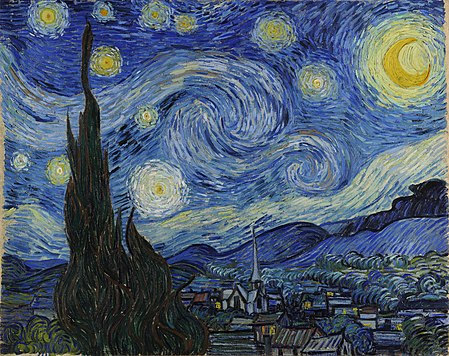
Yes, I know that with the internet and photo-shop, the originality of photographs is of utmost importance. But, the recreation of photographs and paintings provide another perspective or, in Berger’s words, another “way of seeing”. It allows people from all around the world to perceive and experience one painting, photograph, or drawing in a million different ways. In response to Berger’s claim, the reproduction will do nothing to the uniqueness and value of the original image. If that were true, the original The Starry Night painting by Vincent van Gogh would not be over 100 million dollars.

He also claims that the way we grasp and understand an image can affect how we feel about it. He believes that our impression of an image depends on inherited beliefs about its beauty, status, claim, and many more factors. I agree with Berger in that people in different backgrounds and demographics will perceive an image differently but, people in the same demographics and communities will also see the same image differently. Since people all around the world live different lives and have different experiences, they will have separate “ways of seeing”.

At the end of the chapter, Berger underlines the importance of taking the story of the art and connecting it to ourselves and our lives. This claim stuck out to me the most. I personally love experiencing art and music and relating it back to my own life and experiences. It brings me closer to the artist and allows me understand the artist’s innermost emotions, while trying to decode my own. In the end, I personally think it is not how much the painting is worth or whether it’s the original from the 1600’s, it’s what you take from it and what you gain from the experience.

They Say, I Say

CHAPTER 1: “THEY SAY”

Graff and Birkenstein begin with some tips on how to have clear and constructive writing. They explain the importance of writing about what “they” say; this will help readers remember what issue you are addressing. They also suggest that you explain your own perspective on the issue and summarize it at the same time; this will provide the readers with some background and preview the purpose of your writing at the same time. They also provide you with some templates to help you introduce what others are saying. They include standard templates for conventional speakers, templates for introducing the views as your own, and templates that help you think analytically about your issue. Finally, they clarify the importance of using “return sentences” to help readers follow your response.

WHAT I LEARNED:

Before I read this chapter, I was misinformed as to the different templates for introducing issues. I thought there was only one specific way to explain or introduce an issue. I also learned that when you remind your audience on what “they say” you help them fully grasp and understand the topic you are responding to.

CHAPTER 2: “HER POINT IS”

Authors Graff and Birkenstein explain the art of summarizing. They first explain that a good summary calls for a balance between what the initial author was saying and the writer’s main ideas. Perfecting this balance can be difficult, but in the end, the writer just needs to respect the original author’s ideals, while shedding light on their own perspective. Writers who summarize some else’s work with no connection to their views will create “list summaries” that simply regurgitate the author’s ideas and are boring. Also, Graff and Birkenstein discuss summarizing satirically. When summarizing with a satirical mode, you expand on your perspective for a slapstick form of critique. Finally, they reveal templates and verbs for introducing summaries and quotations.

WHAT I LEARNED:

Before reading this chapter, I was not aware of the satirical mode of summarizing. I also learned about the difficulty of balancing the original author’s ideas and your own perspective on an issue.

CHAPTER 3: “AS HE HIMSELF PUTS IT”

Graff and Birkenstein disclose the importance of using quotes and how it functions as your evidence. They begin with explaining some mistakes writers have with quoting, which include quoting too little, or not at all. This chapter also includes two main tips on how to integrate quotes into your writing: by following every quotation with background information to help the reader understand, and by picking your quotes carefully and making sure they are relevant. Graff and Birkenstein also express the importance of avoiding “dangling” quotations. These are quotes with no background or explanation and they can leave the reader confused as to how they relate. They also offer templates for introducing and explaining quotations. Finally, they explain how you can over analyze a quote. If you are in doubt about the amount of explanation you should give, you should risk it and be overly clear-cut instead of leaving your readers confused.

WHAT I LEARNED:

Before I read this chapter, I struggled with quotations and how to integrate them into my writing. I also learned that there were different templates for introducing and explaining quotes.